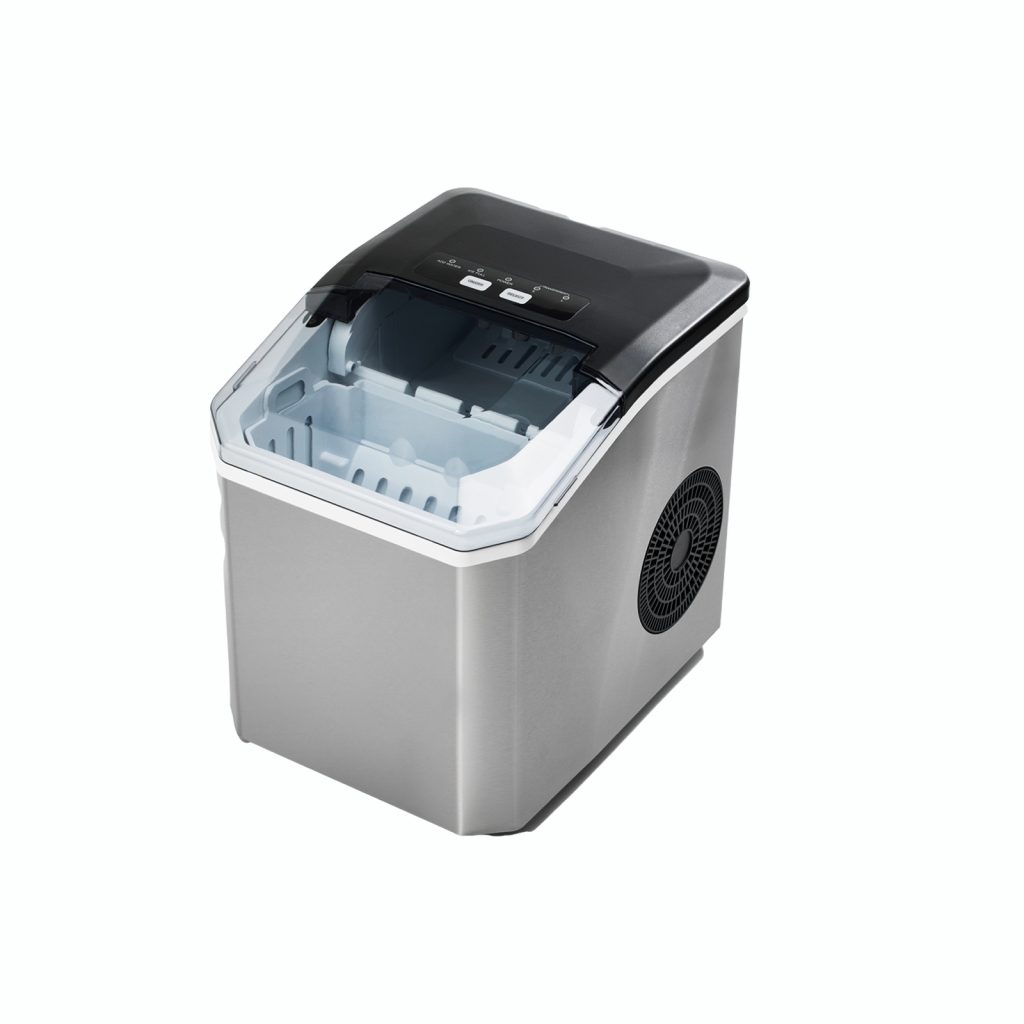
Portable Ice Maker Guide: How to Choose the Best Compact Ice Maker for Your Home
- 9 min read
Why a Portable Ice Maker Belongs in Your Kitchen
There’s a moment we’ve all experienced. You’re hosting a small gathering, or maybe just winding down after a long day, and you reach for the ice tray. Empty. Or worse, the ice cubes taste like everything else that’s been in your freezer for the past month.
This is exactly why portable ice makers have become one of the most popular countertop appliances. Not only do they produce fresh, pure, crystal-clear ice on demand, but they can do it in under 15 minutes.
Unlike bulky built-in models, portable ice makers are designed to fit on any countertop, move easily around your home, and even come along on road trips, camping adventures, or RV getaways.
6 Key Factors to Consider When Buying a Portable Ice Maker
Daily Ice Production Capacity
This is the single most important spec for most buyers. It tells you how much ice the machine can produce in a 24-hour period.
What’s considered good: For a compact home ice maker, 10 to 15 kilograms per day is the sweet spot. That’s enough to keep a small family supplied through a day of entertaining.
- 5 to 8 kilograms per day: best for light use, 1 to 2 people, occasional drinks.
- 10 to 15 kilograms per day: best for regular home use, 3 to 4 people.
- 15 to 20 kilograms per day: best for heavy use, parties, small businesses.
Batch Production Time
How long until you get your first ice? This is where portable ice makers really outshine traditional ice trays.
What’s considered good: Look for a machine that produces its first batch in under 15 minutes. Many mid-range models can do it in 6 to 13 minutes, which means you can have ice for drinks within the time it takes to prepare snacks.
Ice Storage Capacity
Don’t confuse this with daily production capacity. Storage capacity refers to how much ice the machine can hold at any given time before you need to remove it.
What’s considered good: For a compact model, 0.5 to 1.0 kilogram of storage is typical. This might sound small, but remember that most portable machines are designed to produce ice continuously as long as they’re plugged in. If you’re entertaining, you’ll want to empty the basket into a cooler or freezer to keep ice coming.
Build Quality and Materials
You’ll be handling this machine daily, so build quality matters.
What’s considered good: Stainless steel construction is the gold standard. It doesn’t rust, resists stains, wipes clean easily, and looks premium on any countertop. Plastic models are lighter and cheaper, but they tend to show wear more quickly and don’t always feel as substantial.
Noise Level
Portable ice makers are generally quieter than full-size refrigerators, but they’re not silent. The cooling system and the mechanism that drops ice both make some noise.
What’s considered good: Most portable ice makers operate at 40 to 50 decibels, which is about the volume of a quiet conversation. Look for models that specifically mention low noise or silent operation if this is a priority.
Water Tank Capacity
A larger tank means fewer refills, but also a larger footprint.
What’s considered good: For home use, a 1.0 to 2.0 liter tank is typical. A 1.5 liter tank can produce approximately 3 to 4 batches of ice before needing a refill.
Portable vs. Built-In Ice Makers: Which Is Right for You
Portable: no installation, plug and use; highly mobile; daily output 10 to 15 kilograms; storage 0.5 to 1.0 kilograms; low to moderate noise; price 90 to 250 dollars; best for homes, RVs, camping, parties.
Built-In: requires plumbing and installation; fixed; daily output 30 to 100 kilograms; storage 3 to 15 kilograms; low noise; price 500 to 2,000 dollars and above; best for kitchens, bars, restaurants.
Understanding Key Technical Specifications
Power consumption: Lower power consumption means less impact on your electricity bill. What’s considered good: under 150 watts for portable units.
Refrigerant type: More efficient refrigerants like R600A are better for the environment and performance. What’s considered good: R600A or R134A.
Dimensions: Check that the machine will fit on your counter, especially if you have limited space. What’s considered good: compact models 25 to 30 centimeters wide, standard models 30 to 35 centimeters wide.
Weight: Lighter is easier to move, but heavier often means more durable construction. What’s considered good: 5 to 8 kilograms for portable models.
How We Evaluate Portable Ice Makers
At our lab, we test every compact ice maker using a consistent methodology. Here’s what we look for.
- Production Speed Test: We time the first batch of ice from a cold start. Under 15 minutes earns a good rating. Under 10 minutes is considered excellent.
- Capacity Test: We run the machine continuously and measure how many grams of ice it produces in 24 hours, weighing each batch to ensure accuracy. Machines that exceed their rated daily capacity score higher.
- Build Quality Assessment: We examine materials and construction methods. Stainless steel models score higher than plastic models. Fit and finish, panel gaps, and control responsiveness all factor into our rating.
- Noise Measurement: We measure decibel levels from a distance of one meter. Below 45 decibels is considered library quiet, while 50 to 55 decibels is normal conversation.
- User Experience: We evaluate whether the controls are intuitive, how easy the machine is to clean, and whether the water tank is convenient to fill. Machines with clear indicators for add water and ice full consistently score higher.
3 Common Mistakes to Avoid
- Mistake 1: Confusing storage capacity with daily output. A machine that produces 12 kilograms per day might only store 0.8 kilograms at a time. If you're hosting, you'll need to transfer ice to a cooler or freezer to keep up with demand.
- Mistake 2: Buying for peak usage instead of average usage. Yes, a machine that produces 20 kilograms per day is impressive. But if you usually only use ice for a few drinks a day, that extra capacity is wasted, along with extra counter space and power consumption.
- Mistake 3: Not considering water quality. Portable ice makers use the water you put in them. For the best ice, use filtered or bottled water. Hard water with high mineral content can lead to scale buildup and cloudy ice over time.
Top 3 Use Cases for Portable Ice Makers
- Daily Home Use: Keep a portable ice maker on your counter for everyday drinks, smoothies, or iced coffee. The convenience of having ice on demand without filling trays, perfect for busy households.
- Small Gatherings and Parties: Pop-up gatherings happen quickly. A portable ice maker ensures you'll always have enough ice. As long as it's plugged in, it keeps producing, batch after batch.
- Travel, Camping and RV Life: Many portable ice makers are compact enough to fit in an RV kitchen or campsite setup. Just bring a gallon of water, plug it in, and enjoy fresh ice wherever you are.
Conclusion: Choosing Your Perfect Portable Ice Maker
So here’s the thing: there isn’t one best portable ice maker for everyone. The right machine depends entirely on your usage patterns, available space, and budget.
- If you are a daily user, look for 10 to 15 kilograms daily output, quiet operation, stainless steel.
- If you are a party host, look for fast batch time under 12 minutes, good storage capacity.
- If you are an RV owner, look for compact size, lightweight, under 7 kilograms.
- If you are budget-conscious, look for good value, 8 to 10 kilograms daily output, reliable brand.
- If you are design-minded, look for stainless steel or unique finishes, touch controls.
Whatever you choose, make sure it gives you the production speed, build quality, and ease of use that fits your daily routine. The best ice maker is the one you’ll actually use, and enjoy using.
Explore Our Collection
Browse our full range of portable and compact ice makers, designed for kitchens, RVs, offices, and small businesses. Find the model that fits your needs.